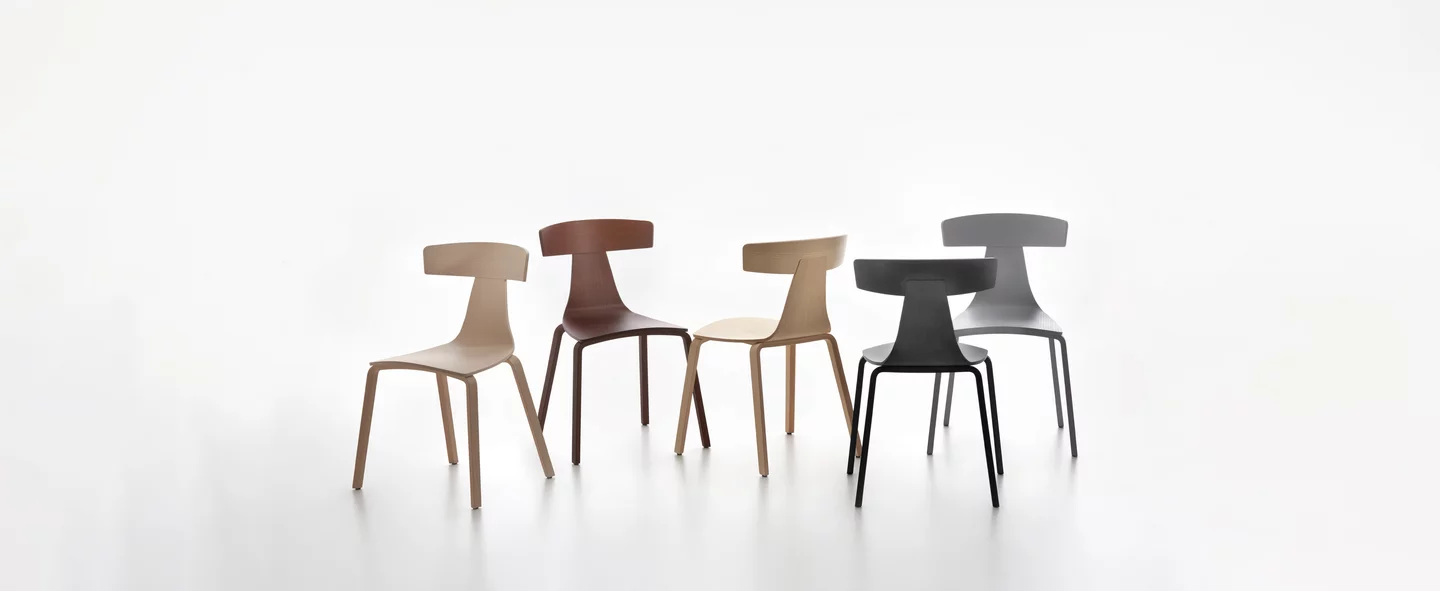
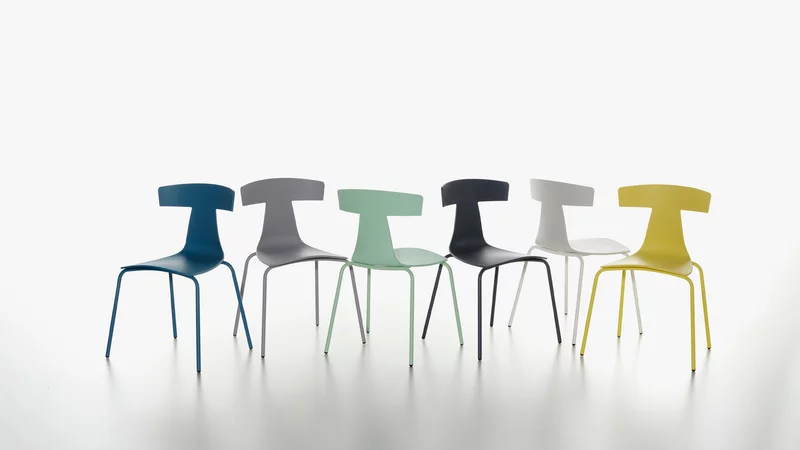
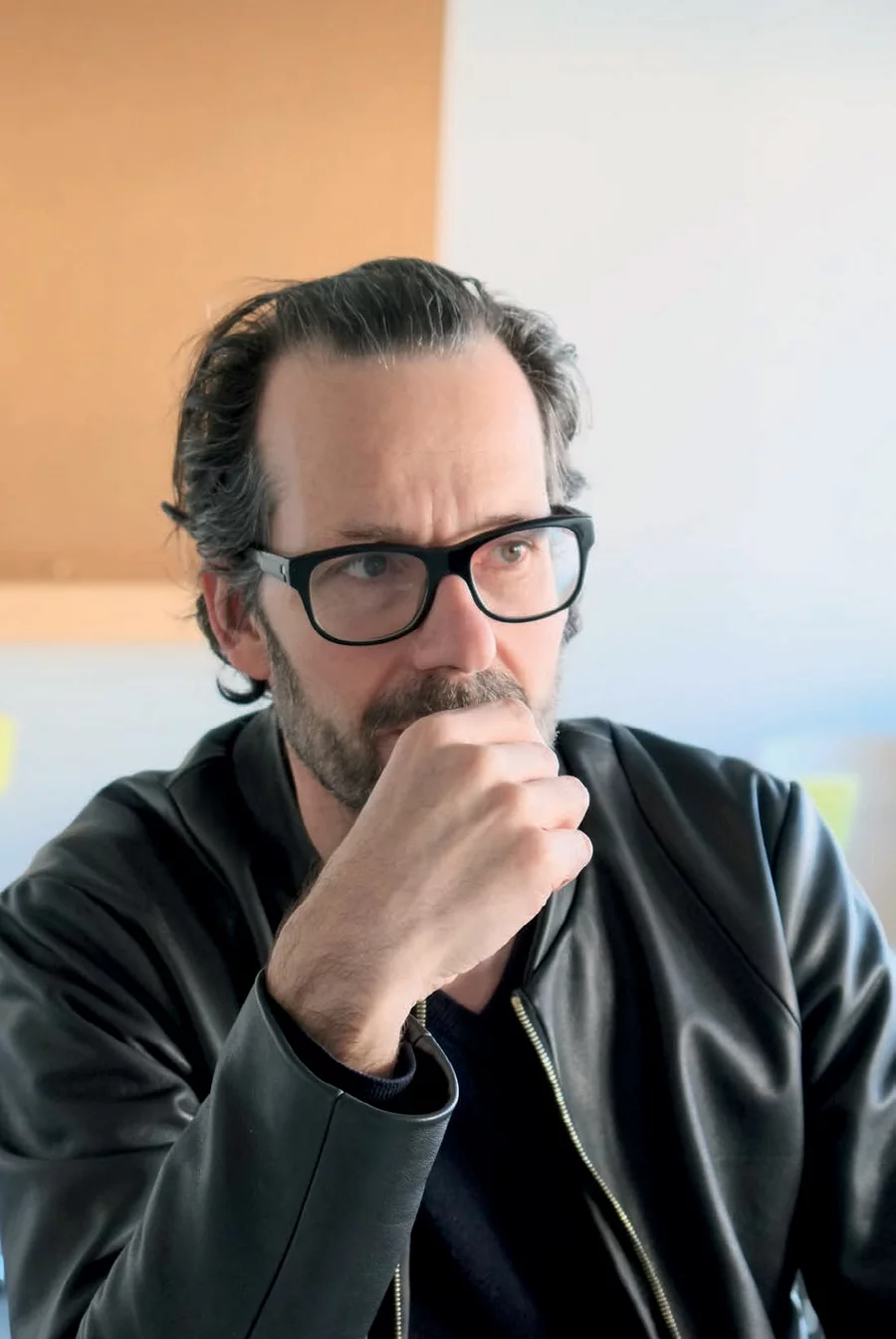
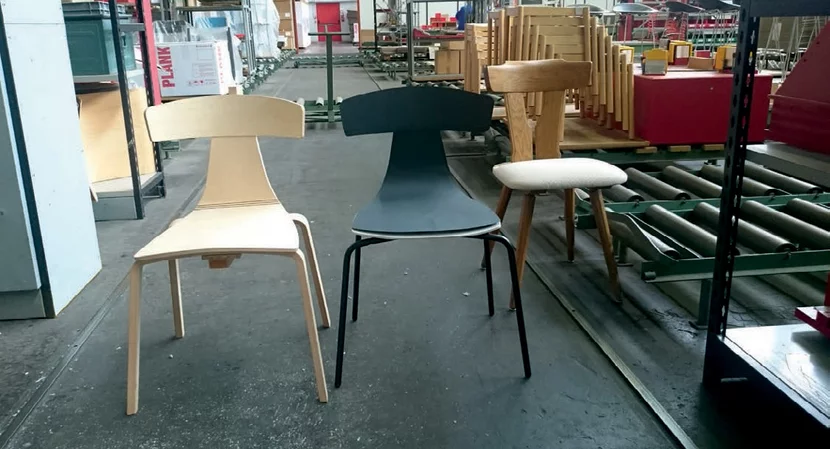
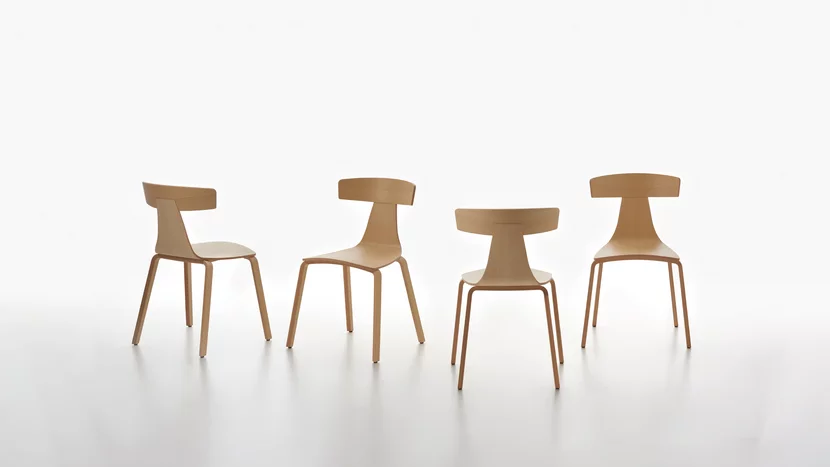
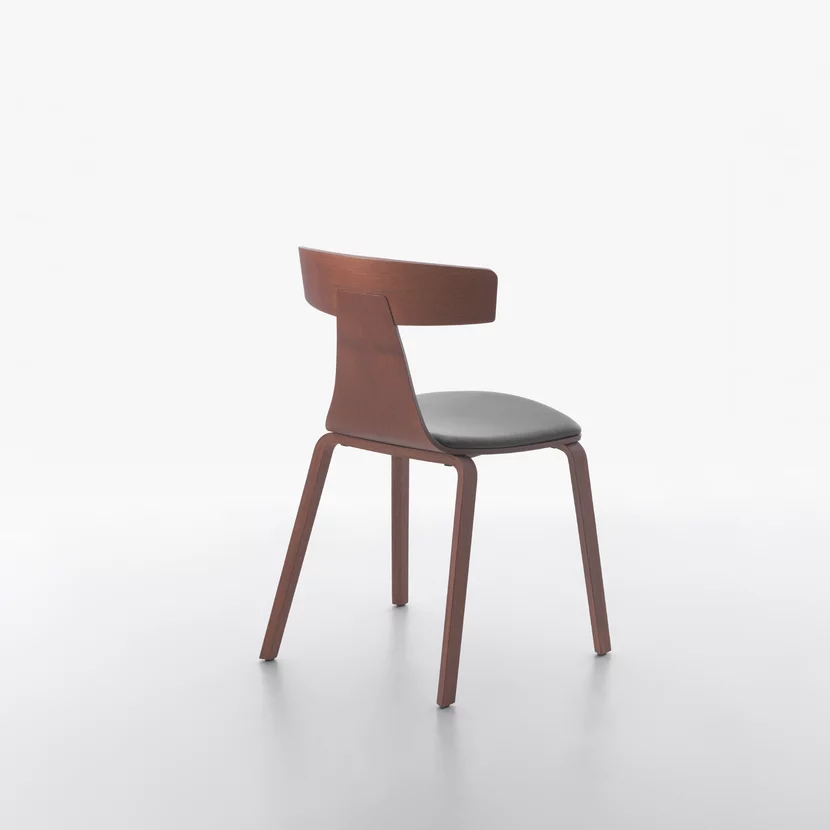
REMO is the fifth chair Konstantin Grcic designed for PLANK in about twelve years. After many projects together, Grcic and the Plank family asked themselves what their next step should be, and what signal they wanted to send. The answer was a chair in moulded ash plywood that goes back to PLANK’s origins in wood. It was shown at the Salone del Mobile in Milan in 2015, and a family has grown from it since.
2015
2015: REMO wood · REMO wood metal
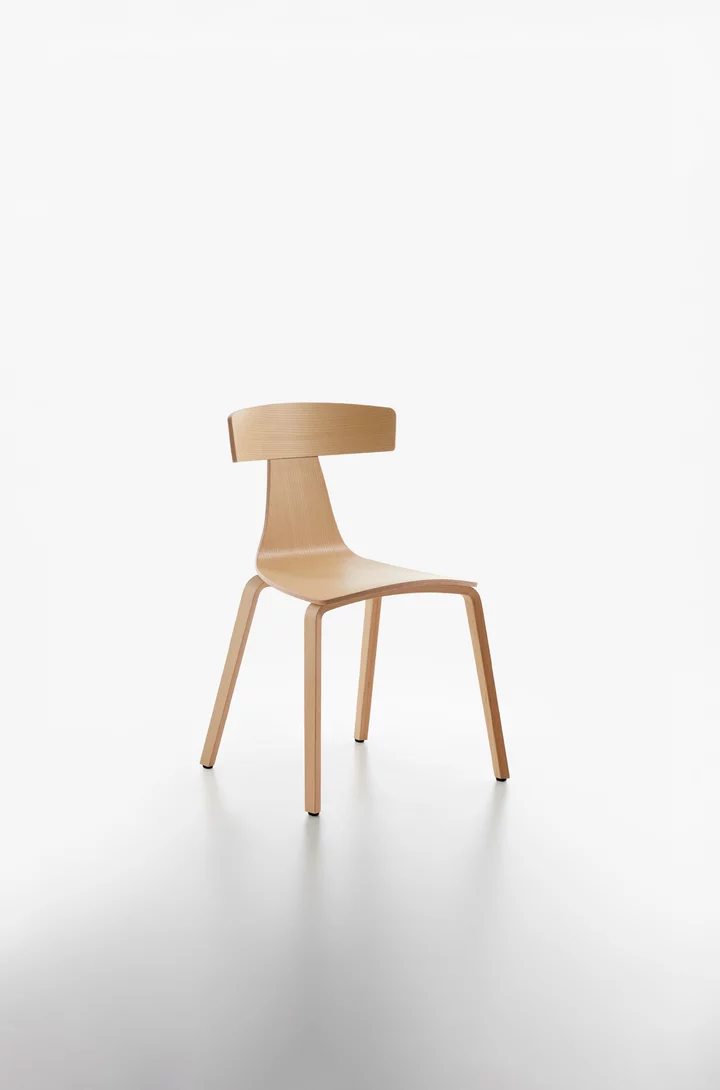
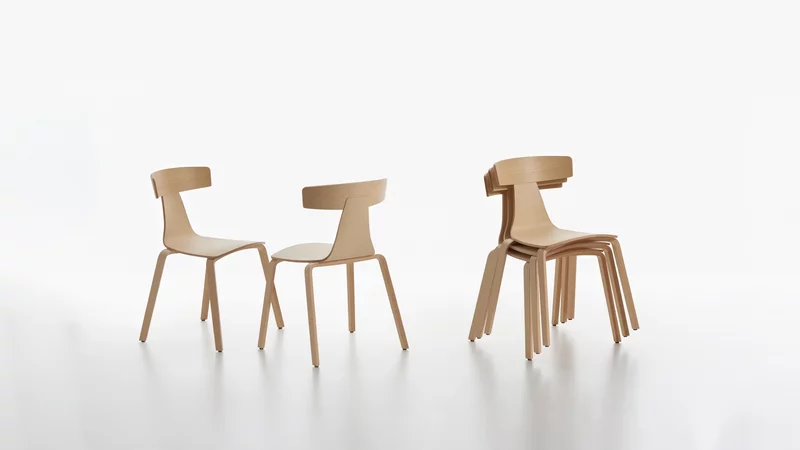
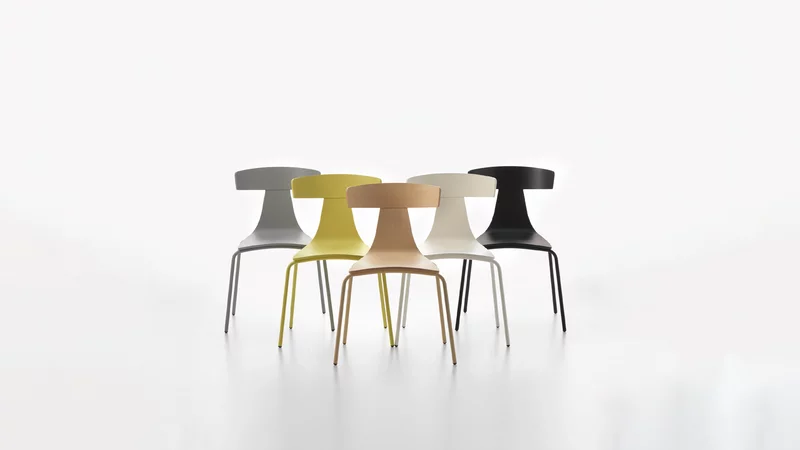
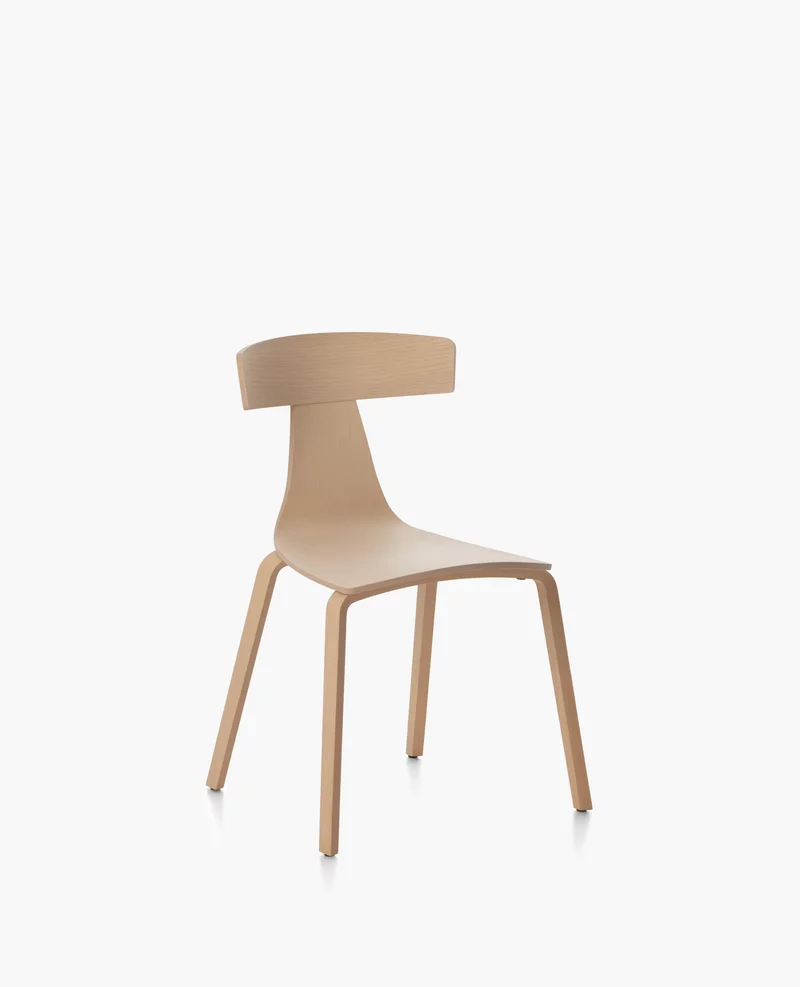
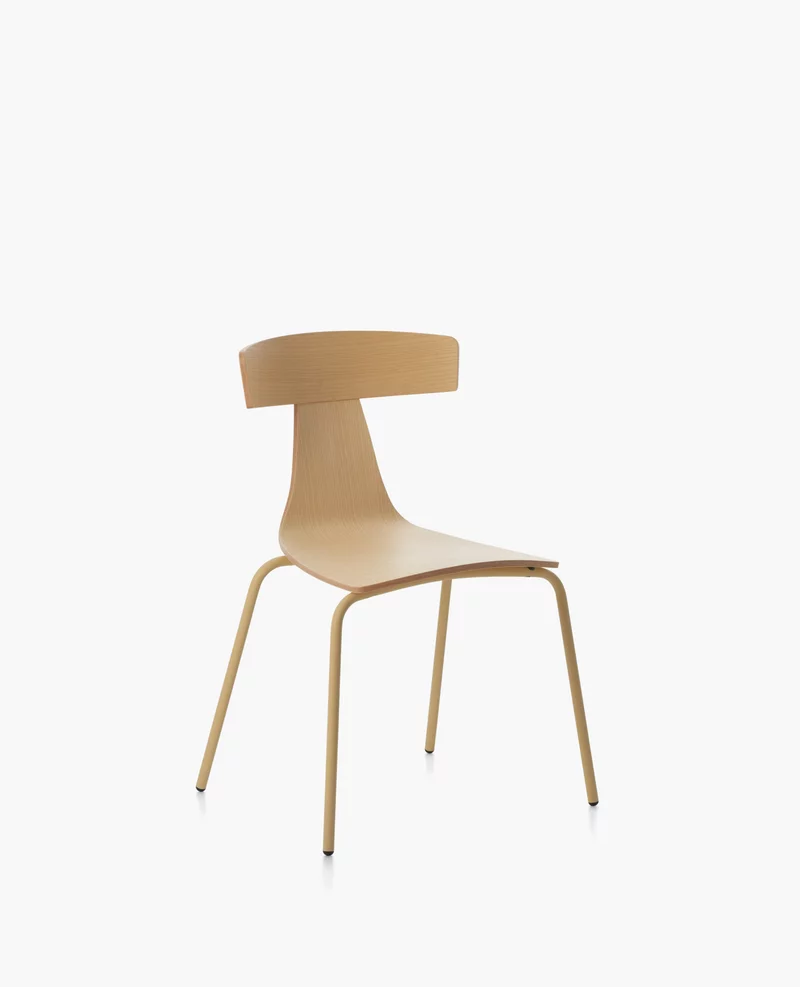
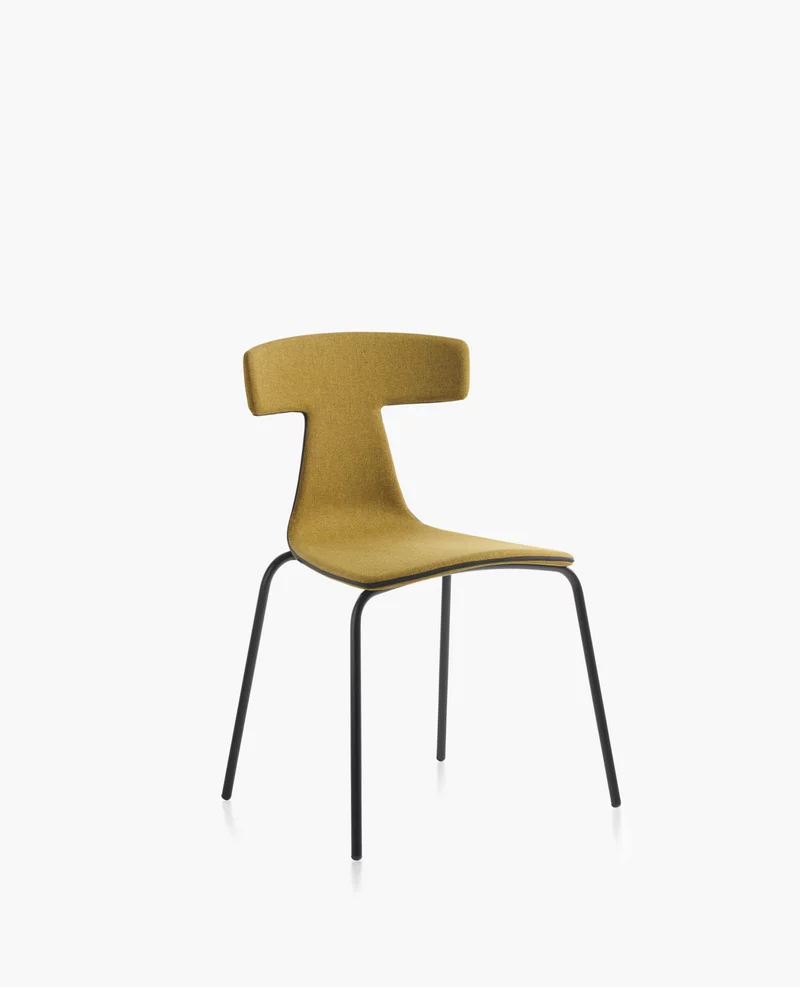
At the Salone del Mobile 2015 PLANK presents REMO in two versions. With legs in bent plywood the chair looks warm and is very light; it comes as a chair and as a stacking chair. On a metal frame, also stackable, it is made for contract use, and shell and frame can be matched to the colours of an interior. Martin Plank Sr. had wanted the chair to stack; for Grcic a fine chair mattered more than a stackable one. In the end both exist.
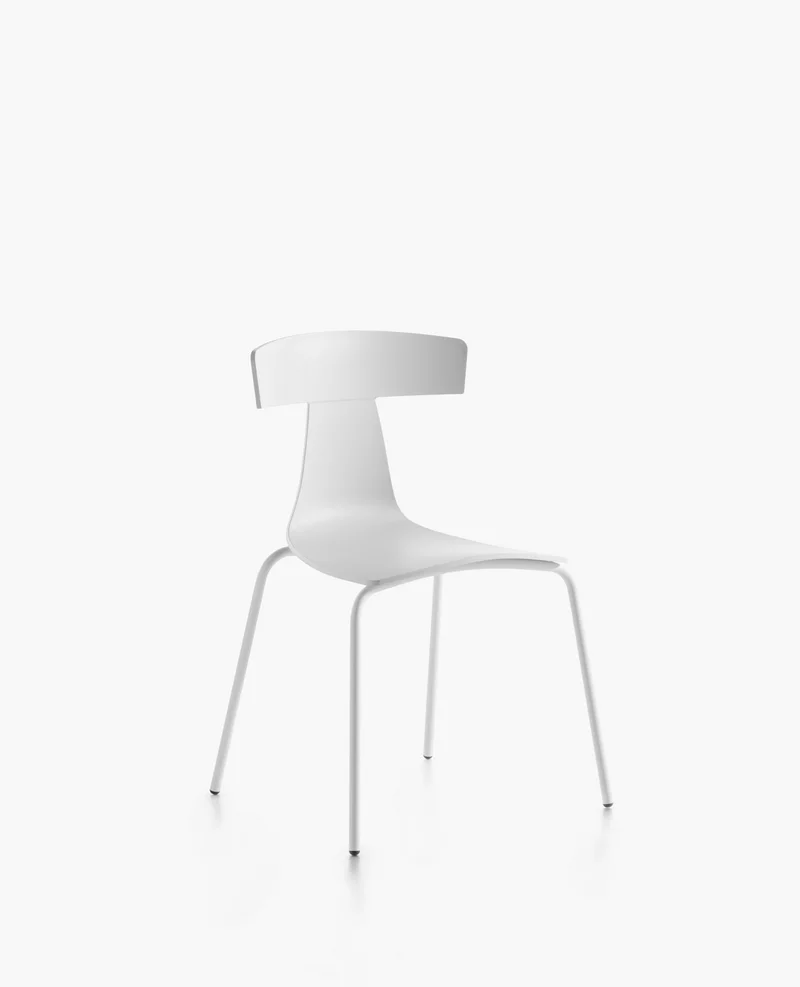
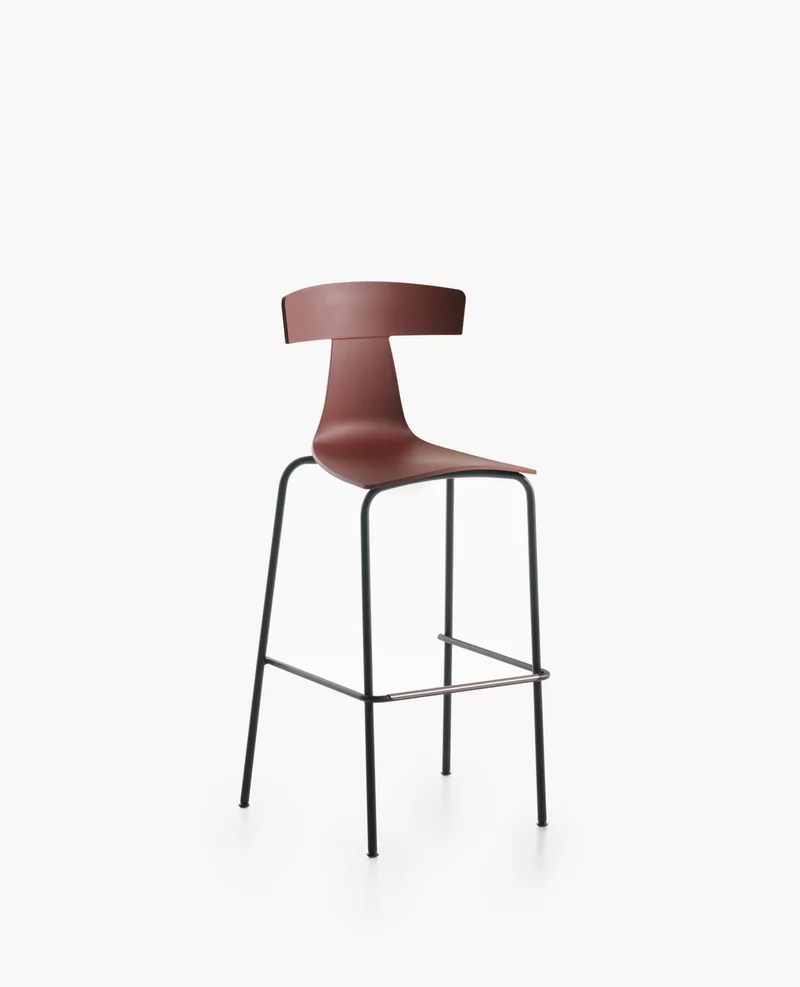
At the Salone del Mobile 2016 REMO appears with a shell in polypropylene, derived directly from the wooden one. It was, Grcic says, Martin Plank Sr.’s last wish. Grcic himself was not convinced at first: a plastic shell, he felt, should not be taken from a wooden chair. With the chair finished he saw it differently. The constraints of wood had helped to find the right shape, and the plastic version can be made in many colours and used outdoors.
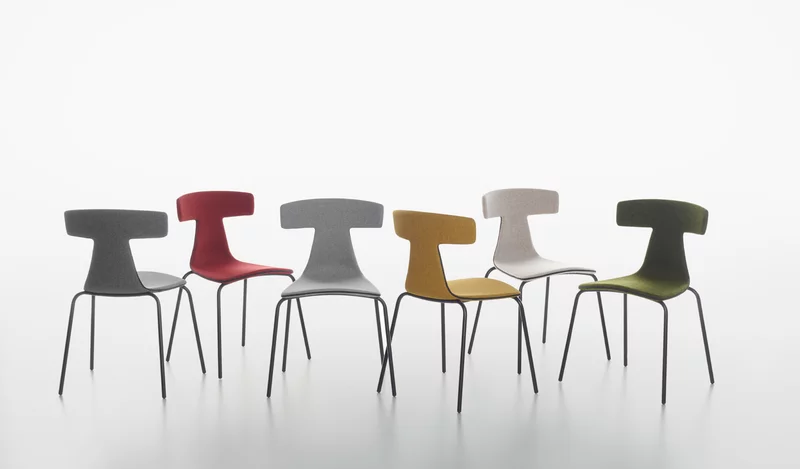
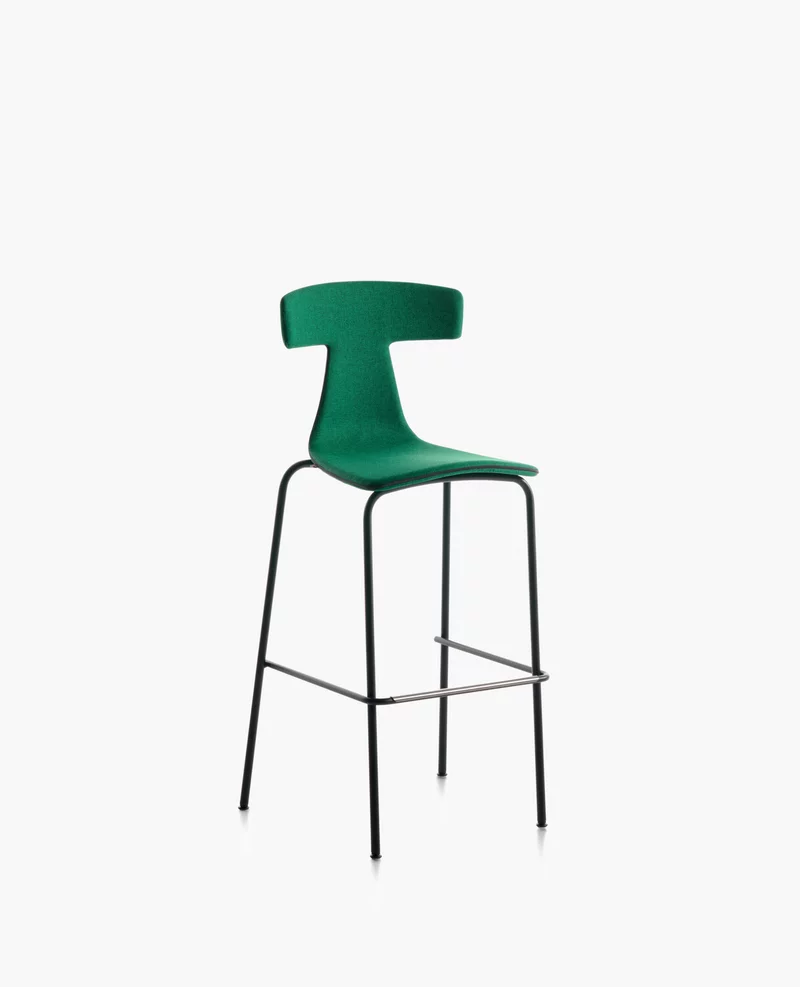
At the Salone del Mobile 2022 the family is extended with a fully upholstered version. The shell has a core of recycled polypropylene and is covered entirely in fabric or leather; the flexible backrest brings comfort and movement. The black tubular frame and hinge set off light and coloured covers and blend in with dark ones.
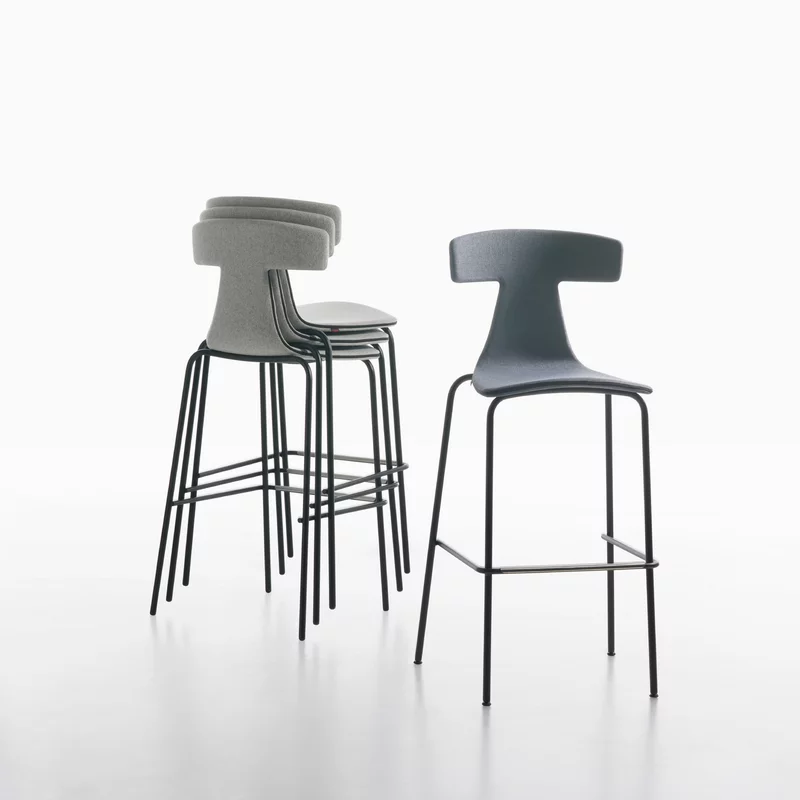
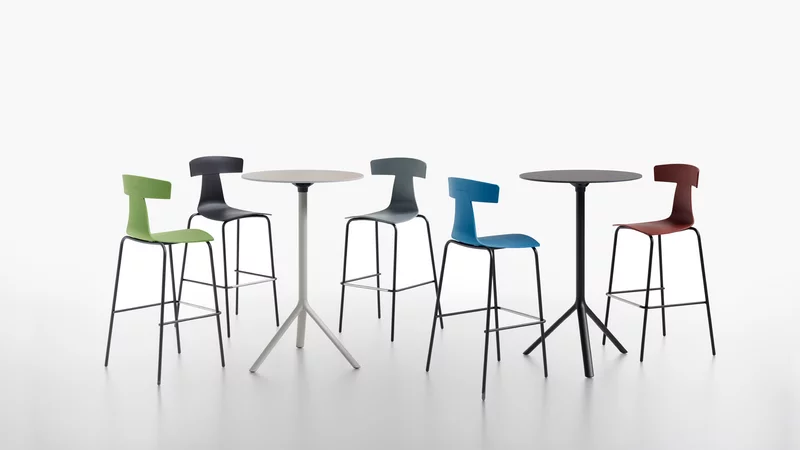
REMO stool plastic brings the polypropylene shell to counter and bar height as well, in the colours of the chair and on a frame powder-coated in black. Today the family comprises six versions.
“Let’s do something clear and intelligible, in which the idea of comfort is conveyed even before the person sits down, from their exact understanding of what it is.”
Konstantin Grcic in conversation with Marco Romanelli, 2016
Back to wood
PLANK began at the end of the 19th century making wooden chairs on the Alpine model: four legs, a seat and a backrest in carved hardwood. Perhaps it was in the name, Grcic says: a plank is the length of wood from which all carpentry starts. When he met Martin and Michael Plank, the company was turning itself into a design company, and Biagio Cisotti had begun the change with 3D plywood and metal legs. After MIURA and MYTO in plastic and MONZA in wood and plastic, Grcic and PLANK wanted to put all their knowledge of wood into REMO.
For Grcic, ergonomics is not a set rule but a territory to be explored: whether a chair is comfortable depends on who sits on it, on what occasion and for how long. With REMO he wanted a more conventional comfort, but one that begins with the eye. The shell has a notable elasticity, and the curved backrest allows different movements. The seat is shaped against habit, highest in the centre and lower at the sides, so the legs are not cramped. At first glance the geometry may look wrong; seated, it works.
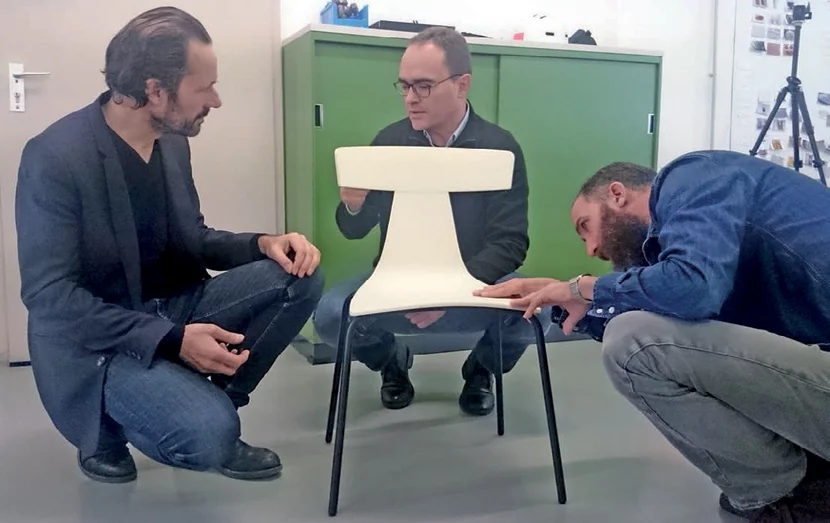
Many beautiful plywood shells already existed, so REMO needed something different. Martin Plank Sr. hoped for a technical innovation; Grcic believed good design can also come from the precision of form alone. The answer was a shell divided into two parts, and it was the joint between them that brought the two together: for Martin Plank it was the technical detail he had been looking for, for Grcic a question of beauty. Grcic never starts from the detail; the joint came from the question of how to bring the two parts together. It is made by machine and finished by hand.
Grcic describes his relationship with Martin Plank Sr., for many years the driving force of the company, as a real friendship: they often went skiing together, and in Ora he came to love the mountains and even understands the local dialect. When REMO was just finished, they found a solid-wood chair with some resemblance in an old PLANK catalogue. Grcic had never seen it; for Martin Plank Sr. it was as if a circle had closed, a return to the company’s roots. REMO was the last chair the two worked on together.